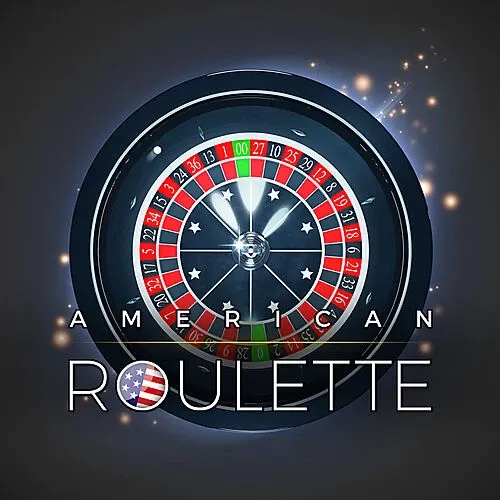
Two green pockets. That's what you notice first when this table loads: a three-dimensional wheel turning on one side, a standard American layout on the other, and a green 0 and 00 sitting together at the head of the grid. The result history fills in along the foot of the screen as you play. It looks familiar. It isn't quite.
American Roulette comes from Switch Studios. It's the double-zero cousin of the single-zero tables in the same section, and three things set it apart. The extra green pocket, obviously. A racetrack that covers a number and its wheel neighbours in one tap. And a few special selections, including the snake and a pick called 007 that spells itself out in chips.
Why the Second Green Pocket Matters
The green double zero is what makes this table American, and it touches every round you play here. The wheel carries thirty-eight pockets instead of the thirty-seven on a single-zero wheel. One extra slot. Sounds tiny.
Does one pocket really matter? Over a session, yes. Both greens sit outside red, black, odd, even, high and low, so those even-chance picks miss a little more often than they would on a single-zero table. And it is not only those: every pick here gives back a bit less over time, because that second green is one more pocket where most chips lose.
The extra green also opens up the five number line, which no single-zero grid has.
Mostly it is single-zero regulars who notice, and I'd tell them to expect the difference rather than be surprised by it. If you'd rather have the same wheel minus the extra pair, European Roulette is the standard single-zero table.
How Does a Round Play Out Here?
Every round runs in the same order. Chips down. Spin. Result. The wheel holds the numbers 1 to 36 in alternating red and black, plus the green 0 and 00. Nothing exotic there.
You pick a chip size, then drop it on the grid or the racetrack. Tap spin and the 3D wheel takes over, the ball skittering round the rim before it settles. Winning chips get paid, the rest clear away, and the number slides into place. Where does the result go? Straight onto the line at the bottom, next to everything before it.
How it swings is down to you more than the table. Spread chips across red, black or a dozen and something lands in most rounds, in small amounts. Lean on straights and you'll sit through long quiet stretches, then a sudden spike. Same wheel either way.
Your picks set the rhythm. If you want to weigh this table against the other wheels first, the roulette section has them all side by side.
Where Your Chips Can Go
The grid is a standard American layout, so if you've played roulette anywhere, you'll know your way around. Inside picks cover fewer numbers, outside picks more ground. Here's the full menu:
- Straight: One number on its own, the longest shot on the table.
- Split: Two touching numbers, with one chip on the line between them.
- Street: Three numbers in a row, covered together.
- Corner: Four numbers meeting at a single point.
- Five number line: Zero, double zero, one, two and three under one chip, and the stingiest pick on the layout for the ground it covers.
- Six line: Two rows at once, six numbers under a single chip.
- Dozens and columns: Twelve numbers in one pick.
- Red or black, odd or even, high or low: The even-chance picks out on the edge of the layout.
A quick word on that five number line. It's the one pick only this table offers, which makes it tempting, but what it pays falls short of what five pockets should be worth. I treat it as a novelty.
You don't have to stick to one pick. I'd usually pair a couple of outside picks with a straight, so some chips cover wide ground while a long shot rides along. More chips means more results per round. Nothing else. For another single-zero table to spread chips on, French Roulette sits a couple of tiles over.
Racetrack, Neighbours and the Snake
The racetrack is the wheel order laid out as an oval, and it's where the nine neighbours come in. Pick a number on it, set how many neighbours you want, and the table covers that number plus up to nine of the pockets beside it on the actual wheel. One placement. A whole slice of the wheel.
Wheel neighbours are scattered all over the grid. On the American wheel, 0 sits between 28 and 2, nowhere near each other on the layout, so covering that slice by hand means hunting for it. On the racetrack it's one tap, and nudging the count widens or narrows the slice. A wider slice means more results per round. That's all it changes.
The special selections sit alongside it: red splits, black splits, the snake running diagonally across the grid, and 007, where the chips spell the number out on the layout. To see how another table handles its extras, Multifire Roulette is right next door.
Hot and Cold Panel, History and Autoplay
Hot and cold numbers: a panel shows which numbers have turned up most and least lately, across the whole wheel. Fun to glance at. But it's a record, not a forecast. The wheel doesn't remember a thing.
The history line: every result of the session sits along the bottom, so the run you just played stays in front of you.
Autoplay: set a number of rounds and the table plays them out without another tap. If you're curious how sweepstakes play compares with a regular online casino, there's a sweepstakes vs online casinos breakdown on the blog.
Why Play It at SweepSpot
Here's how I'd use it at SweepSpot: learn the double zero on Gold Coins first, try a racetrack slice, then switch to Sweepstakes Coins for a chance at prizes once the layout feels natural.
It runs in the browser, nothing to download. On a phone, lean on the racetrack. Tapping one number on the oval beats aiming at tiny grid squares with your thumb. Rounds move quickly (a spin, a settle, done), so an hour can slip by without you noticing. Set a comfortable limit and keep the Responsible Play page in mind. The rest of SweepSpot'scasino games are a tap away.
Give the Double Zero a Spin
Who's it for? Players who like a classic American grid, the racetrack and the freedom to set their own rhythm with the picks they choose. If you're a single-zero loyalist, this probably isn't your table. Same if you want a game built around big swings, and the slots lobby will scratch that itch better. Everyone else? Put a chip on the double zero and see how it treats you.